A bright edge. A deepened color. A small hollow where the light comes to rest.
An old object offers more than its outline. Look closely and another composition appears: warmth gathering around a raised letter, a quiet grey across a once-bright field, a surface whose unevenness makes it seem almost alive. These details can draw us in as strongly as the design itself.
Patina belongs to this intimate way of looking. It is the character a surface acquires, and the beauty we find in that character. On a familiar object, it can become inseparable from the thing we value.
The maker gives an object its form.
Time gives us another way to see it.
What we mean by patina
Patina has become a broad term for the colors and textures shaped by age and exposure. From soft yellows to glowing greens, these uneven changes create patterns unique to each object, becoming part of its character and its continuing story.
The word has several meanings. In its broad, aesthetic sense, it describes a pleasing change acquired by a surface over time; it can be used of furniture as well as metal. In a narrower technical sense, a metal patina is a surface layer produced by chemical change. Applied finishes are also sometimes described as patinas, although specialists differ over the boundaries of the term.
For this article, patina is both a material phenomenon and an invitation to look. Wear, a surviving finish, tarnish, and reflected light may all contribute to an object's appearance, but they are not interchangeable explanations. Silver's dark surface, for example, is usually called tarnish in conservation writing.
Color becomes a landscape
At the scale of a coin, a patch of warm brown can feel like an island. A cooler band around its edge becomes a shoreline. The pleasure comes from the relationship between these areas: their balance, their irregular boundaries, the way one color lets another emerge.
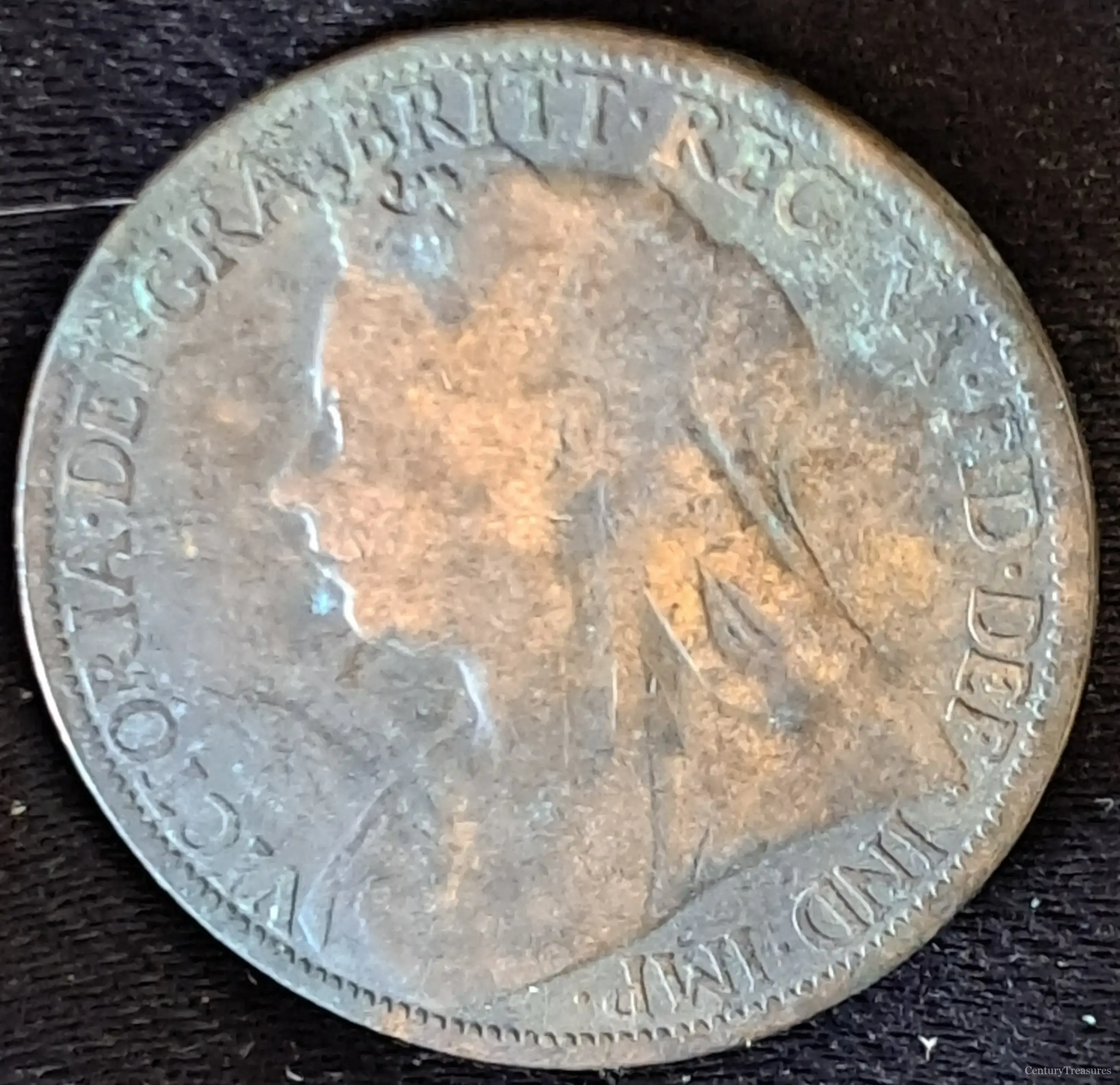
Collection study · Color. The 1896 penny brings warm and cool areas into one small field. The softened portrait and remaining letters give those colors a structure. Photograph: CenturyTreasures.
On copper and its alloys, patinas can range through reds, browns, blacks, blues, and greens. Their color alone does not tell us whether a surface is stable. Nor should the palette in a photograph be read as a chemical analysis: illumination and the camera help shape what we see.
Light finds the high points
A raised edge can draw a fine line of light across a darker ground. On a button, that line follows the maker's work: a number, a crown, the rim of a letter. Surface color and relief become collaborators. One lends depth; the other gives it direction.
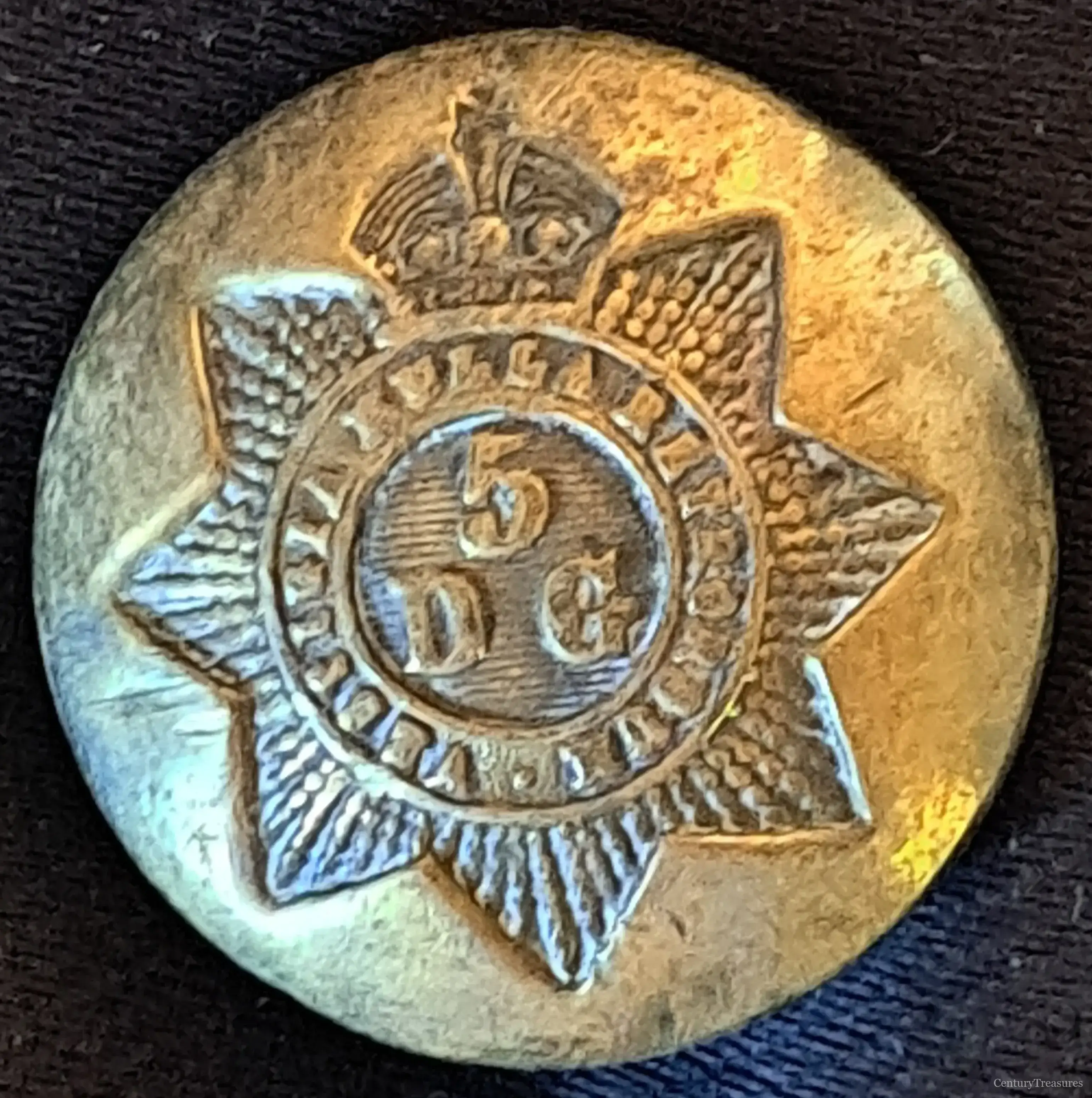
Repeated contact can change a surface, but an attractive finish may also have been intentional from the beginning. Makers and artists have used chemical patination and applied coatings to alter color and sheen. Later handling, exposure, and treatment can modify that original appearance. An aged surface may contain several chapters at once.
Turn the object over
The reverse asks for a different kind of attention. Here, decoration gives way to construction: a loop, a join, a maker's name. Color travels around these practical features and light slips into places the front never reveals.

Collection study · The hidden surface. The reverse of the St Giles Without Cripplegate button offers a small composition of its own: the dark loop, the stamped letters, and the shifting tones around them. Photograph: CenturyTreasures.
These marks invite questions about making and use. They do not answer every question. A surface cannot, on its own, identify a former owner, prove a date, or tell us which journey an object took. Its emotional force can remain even where its history is incomplete.
How time enters the surface
Time gives change an opportunity; the material and its surroundings determine what happens. Moisture, gases in the air, contact, and storage conditions can affect metal surfaces. Existing lacquers and other finishes also influence their appearance and response. Two objects made from similar metal can therefore come to look very different.
There is no universal progression from bright to brown to green, and no color chart that can reliably turn a patina into an age. Original finishes, later interventions, and natural changes can be difficult to distinguish without examination and records.
This is where the study of materials and the appreciation of patina meet. The material helps explain the possibilities. The individual surface asks us to notice what is actually there.
Preserving the character
Appreciating an old surface includes caring for its future. A firmly attached, unchanging patina and a surface that is actively deteriorating call for different responses. Newly appearing verdigris, powder, loose flakes, or continuing change deserve attention; color alone is not a diagnosis.
Before polishing, find out what the surface is and how the object was intended to look. Abrasive polishing removes some metal as well as tarnish, and repeated work can reduce fine detail. An original patina or lacquer can be lost through unsuitable treatment. When the finish is uncertain, seek conservation advice before trying to restore a shine.
Care begins with looking closely enough to understand what we might lose.
A reason to look again
The next time an old object catches your eye, linger over one small area. Follow a change in color. Notice where a line becomes soft, where an edge stays bright, where the reverse holds an unexpected detail.
There is a kind of natural art in these relationships. No single hand has composed the whole surface we see today. Making, use, environment, and care have each contributed. Patina gives that accumulated life a visible presence.
Sources & further looking
The observations about the pictured objects are visual readings, not assessments of their chemistry, authenticity, or conservation condition. The following references support the explanations of patina and care.
- Getty, “Patina” — vocabulary entry, Guidelines for the Technical Examination of Bronze Sculpture.
- Canadian Conservation Institute, Recognizing Active Corrosion, CCI Notes 9/1.
- Ann Boulton, Susanne Gänsicke, and Shelley Sturman, “Patina”, Guidelines for the Technical Examination of Bronze Sculpture, Getty.
- Canadian Conservation Institute, Caring for Metal Objects.
- Canadian Conservation Institute, The Cleaning, Polishing and Protective Waxing of Brass and Copper, CCI Notes 9/3.